



 Home
 PRODUCTS
 RENTAL EQUIPMENT
 COVID-19 Products
 About Us
 New Products
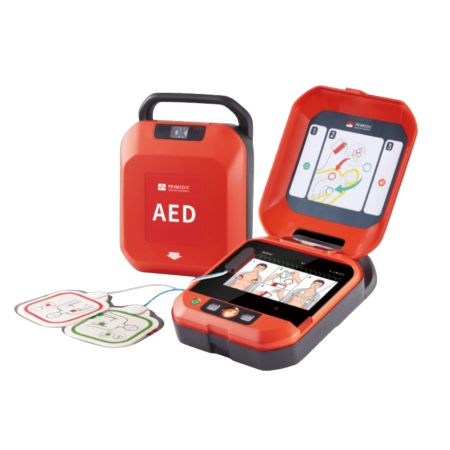
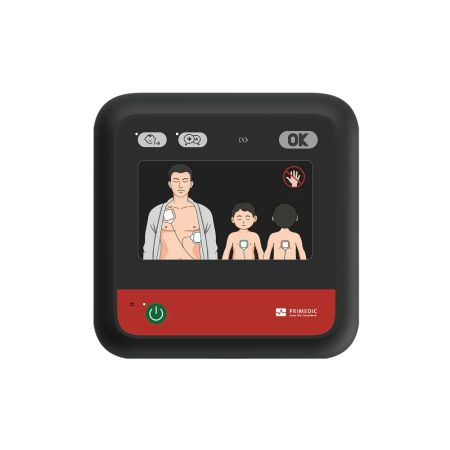
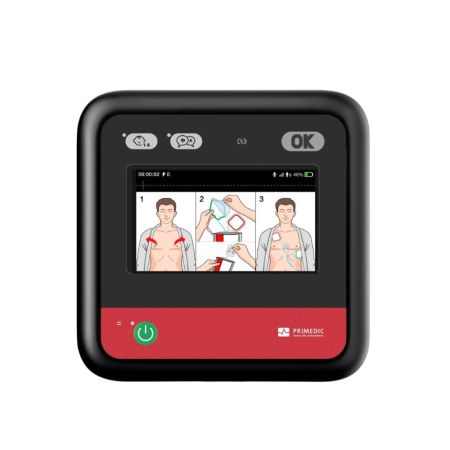
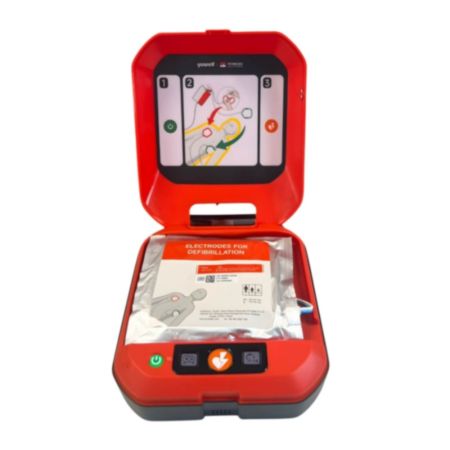


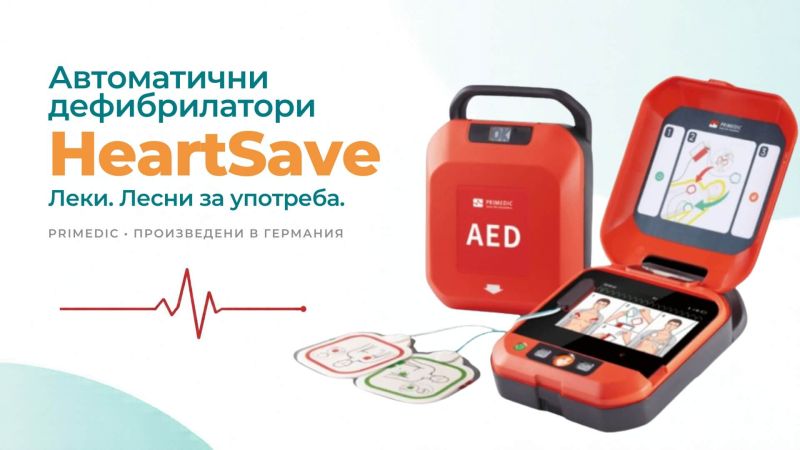
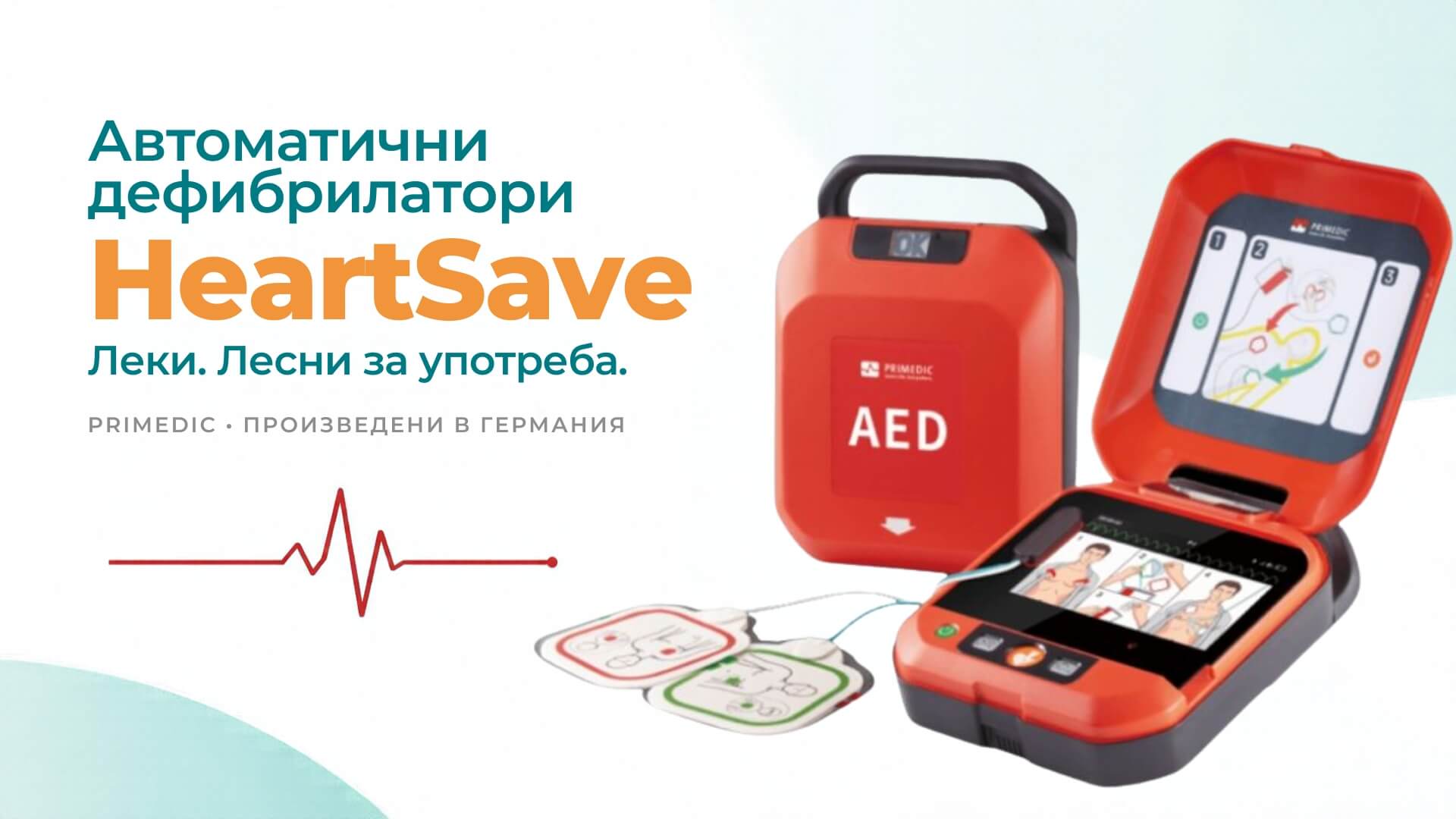
We are pleased to announce that the Adapt BG catalog now includes the range of automated external defibrillators from the German manufacturer PRIMEDIC, a brand of Metrax GmbH. Four models, from a compact device without a display to a version with a screen and a sensor for the quality of chest compressions, are now available on our website and in our stores across Bulgaria. All of these defibrillators are designed and developed in Germany and comply with the European Medical Device Regulation.
A defibrillator is a device most people will never use – and that is exactly why it raises so many questions. In this article we answer the questions asked most often: can an ordinary person use a defibrillator, can it cause harm, and what should you do in an emergency.
Why a defibrillator is needed at all
In sudden cardiac arrest the heart stops pumping blood. In most cases the cause is chaotic electrical activity – ventricular fibrillation – and the only thing that can stop it is an electric shock.
Everything comes down to time. With every minute without defibrillation, the chance of survival falls by 10 to 12 percent. An ambulance that arrives in eight minutes already faces a much worse starting point than in the first minute.
The last figure explains why the topic is not only about airports and stadiums. If someone in the family has heart disease, the most likely place for an arrest to happen is their own home.
Data from the European Resuscitation Council also show where the weak point is: bystander CPR is given in 58% of cases on average, but an automated defibrillator is used in only 28% on average, and in some countries in fewer than 5%. The devices are there. People do not reach for them.
What an AED is and who can use it
An automated external defibrillator is a device designed to be used by a person without medical training. It is not a simplified version of a hospital machine – it is built on a different idea.
Once you attach the pads, the device analyzes the heart rhythm on its own and decides on its own whether a shock is needed. Voice prompts guide you step by step, in your chosen language.
There are two types of defibrillator. Fully automatic models deliver the shock themselves after warning everyone to stand clear. Semi-automatic models say that a shock is needed, and the rescuer delivers it by pressing a button. With both types the device decides whether a shock is needed – the person cannot deliver one if it is not.
The most important thing to know
The device will not deliver a shock if a shock is not needed. The rhythm analysis is automatic, and if the heart is not in a state that responds to defibrillation, the device simply will not allow a shock. This means that you cannot harm someone by attaching an AED. The most common fear about these devices is also the most unfounded. The only rule: no one touches the person during the analysis and the shock – the device will warn you about this.
⚠️ If you witness a cardiac arrest
| Step | What to do |
|---|---|
| 1. Check for response and breathing | If the person does not respond and is not breathing normally, act! |
| 2. Call 112 | Or ask someone else to call while you begin. |
| 3. Start chest compressions | Immediately – in the center of the chest, hard and fast. |
| 4. Send someone for a defibrillator | If there is one nearby. Do not stop compressions to look for it yourself. |
| 5. Switch on the device and follow the voice prompts | It will tell you everything else. |
A defibrillator does not replace chest compressions. The two go together, and the device will tell you when to stop and when to continue.
The four models
The differences between them come down to three things: whether the shock is delivered automatically or with a button, whether there is a screen, and whether there is feedback on the quality of chest compressions. The core function – rhythm analysis – is the same.

HeartSave myPAD 670A – without display
Fully automatic. Guidance through LED icons and voice prompts. The simplest option for places where the device is kept in a cabinet and used rarely.

HeartSave myPAD 675A – with display
Fully automatic. A 4.3-inch color screen with a chest compression animation, a compression quality indicator, elapsed time and an ECG curve. For people who find visual guidance easier to follow.

HeartSave Y0
Semi-automatic – the shock is delivered with a button. The basic model of the Y series. Voice prompts in several languages, including Bulgarian, pediatric mode and a sturdy housing for transport. The entry point to the range.

HeartSave YA5 – display and CPR sensor
Fully automatic. The sensor measures the depth and rate of compressions and tells you in real time whether they are strong enough and fast enough.
How to choose a model
The core function – rhythm analysis – is the same in all models. The difference is in how much support the person using them gets – and that depends on the location.
| If the device is for… | Suitable model | Why |
|---|---|---|
| The home of a person with heart disease | Y0 or myPAD 670A | It will be used by a small circle of people who can be trained in advance. A screen adds less. |
| Office, shop, hotel | myPAD 675A | It will be used by any employee under great stress. The visual animation helps more than the voice alone. |
| Gym, school, public building | myPAD 675A or YA5 | Many people pass through and the chance that it will be needed is higher. Feedback on compressions matters. |
| A team with basic training | YA5 | The CPR sensor turns training into real compression quality, not theory. |
| Damp or dusty environment, vehicle | myPAD series | IP66 protection – higher than that of the Y series. |
Fully automatic or semi-automatic? For people without experience, a fully automatic model removes one step at the most stressful moment – they do not need to press a button. A semi-automatic model gives a trained person control over when to deliver the shock. Of the four models, HeartSave Y0 is semi-automatic, while myPAD 670A, myPAD 675A and YA5 are fully automatic.
💡 If you are torn between a display and no display
Ask yourself who will be holding the device. If it is a trained person who knows what they are doing, the voice prompts are enough. If it is a passer-by with shaking hands, the screen with a compression animation makes a noticeable difference. The price difference between the two models is smaller than the difference in confidence.
What the whole range has in common
One-button pediatric mode
No separate pediatric pads are needed. The device switches the energy to pediatric levels at the press of a button, which saves time and prevents mistakes at the worst possible moment.
Guidance that follows your pace
The prompts do not follow a fixed schedule but adapt to the speed at which you work. The volume of the voice adjusts to the surrounding noise.
Biphasic waveform
The current standard for defibrillation – more effective at lower energy than older monophasic devices.
Up to six languages, including Bulgarian
The language is selected with a button, which is practical in places with foreign visitors or employees.
Durability
A lithium-ion battery with a long shelf life and about 230 shocks at 200 J. The myPAD series has an IP66 protection rating.
Event recording
The device stores the data from the rescue, which is useful for later analysis and for handing over to the medical team.
Maintenance: the part that gets underestimated
A defibrillator that does not work when it is needed is worse than no defibrillator, because it creates a false sense of security. That is why maintenance is not a formality.
| What | What it means |
|---|---|
| Self-test | The device checks itself periodically and signals if there is a problem. The indicator should be checked regularly, not once a year. |
| Pads | They have an expiry date and are replaced when it passes or after use. |
| Battery | Replaced according to the manufacturer's schedule, whether or not the device has been used. |
| Location | The device must be visible, signposted and accessible – not locked in an office to which only one person has the key. |
| People | At least several people on site should know where it is and have seen it opened at least once. |
Misconceptions about defibrillators
| Claim | What is true |
|---|---|
| "I could harm the person if I use the defibrillator wrongly." | The device analyzes the rhythm and does not deliver a shock unless one is indicated. Doing nothing is far more dangerous than trying to help. |
| "You need medical training to use such a device." | These devices are designed precisely for people without medical training. Training helps with confidence, but it is not a requirement for using Primedic defibrillators. |
| "A defibrillator restarts a stopped heart." | Quite the opposite – the shock stops the chaotic electrical activity so that the natural rhythm can return. When the heart has stopped completely with no electrical activity, a shock does not help and the device will not deliver one. |
| "If there is a device, compressions are not needed." | Chest compressions keep blood circulating between shocks and are just as important. The device will tell you when to continue them. |
Not sure which model is right for your site?
Contact us or visit one of our stores across Bulgaria. We will discuss where the device will be kept, who will use it and what training is needed.
Frequently asked questions
Can a person without medical training use a defibrillator?
Yes. Automated external defibrillators are designed precisely for people without medical training. Once the pads are attached, the device analyzes the heart rhythm on its own and gives voice prompts step by step. Training helps with confidence, but it is not a requirement for use.
Can a defibrillator cause harm?
Not to a person in cardiac arrest. The device delivers a shock only if the rhythm analysis shows that one is needed. The only rule is that no one touches the person during the analysis and the shock, and the device warns about this.
What is the difference between a fully automatic and a semi-automatic defibrillator?
A fully automatic device delivers the shock itself after warning everyone to stand clear. A semi-automatic device says that a shock is needed, and the rescuer delivers it by pressing a button. With both types the device decides whether a shock is needed.
How much does an automated external defibrillator cost?
PRIMEDIC HeartSave models at Adapt BG are priced from €1,498.80 to €1,836.00 including VAT. On top of the device price come the pads and the battery, which are replaced periodically according to their expiry dates.
What maintenance does a defibrillator need?
The device tests itself and signals if there is a problem, so the indicator should be checked regularly. The pads have an expiry date and are replaced when it passes or after use, and the battery according to the manufacturer's schedule. The device must be visible, signposted and accessible.
Written by: Grigor Angelov
Sources:
European Resuscitation Council Guidelines – Epidemiology of cardiac arrest in Europe. Data on the incidence of out-of-hospital cardiac arrest, survival and the use of automated external defibrillators.
European Registry of Cardiac Arrest (EuReCa) – data on the decline in the chance of survival with every minute of delay in defibrillation.
PRIMEDIC / Metrax GmbH – technical documentation for the HeartSave myPAD and HeartSave Y series.
Data checked: September 2026.
An automated external defibrillator is a medical device. Read the manufacturer's instructions before use. This article is for information only and does not replace first aid training. If you suspect cardiac arrest, call 112 immediately.
Date: 18 Sep 2026
Post comment